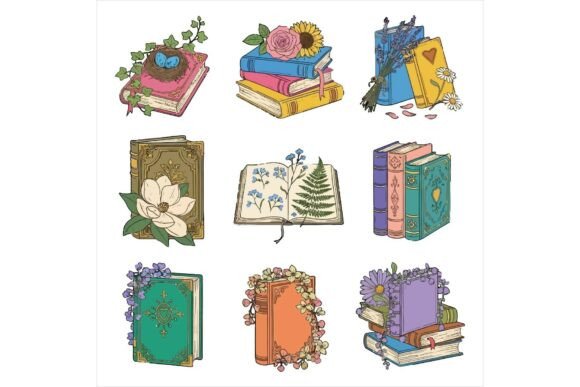
Vintage Books & Flowers: An Embroidery Review
As a designer who has spent countless hours staring at digitized files and watching needles dance across fabric, I have learned to look past the initial flash of a pretty preview. What matters is how a design behaves under tension, how it reads from three feet away, and whether it holds up after the third wash. When I first opened the Vintage Books with Flowers Illustrations, my immediate reaction was one of quiet appreciation. This is not a loud, shouting design. It is a whisper of nostalgia, perfect for the current trend of "dark academia" and cottagecore aesthetics that are dominating handmade marketplaces right now.
The Aesthetic Appeal and Visual Mood
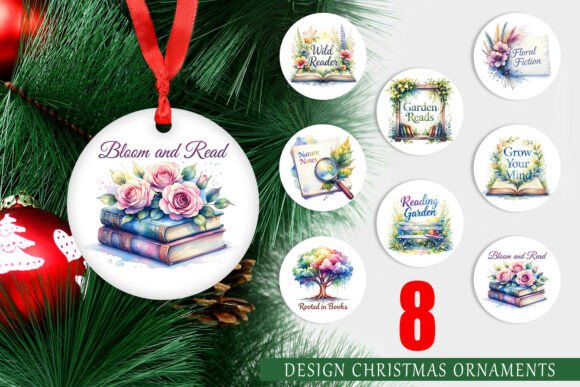
The composition strikes a delicate balance between literary charm and botanical softness. The stack of books provides a geometric anchor, while the surrounding floral elements introduce organic movement. For an embroidery project, this contrast is vital. Pure geometry can feel sterile if not softened, and pure florals can sometimes lack structure. Here, the hard lines of the book spines ground the design, giving the eye a place to rest before wandering through the petals and leaves.
The mood is distinctly vintage, evoking images of dusty library corners and pressed flowers in old journals. This emotional resonance is what sells a handmade product. Customers are not just buying a stitched image; they are buying a feeling. For Etsy sellers and small shop owners, this narrative potential is gold. It fits seamlessly into collections focused on reading, education, nature, or slow living.
Real-World Application: The Tote Bag Test
To truly evaluate the Vintage Books with Flowers Illustrations, I mentally placed it on a canvas tote bag. This is perhaps its most natural habitat. Canvas offers the stability needed for moderate stitch density without requiring heavy-duty stabilizers. Imagine this design centered on a natural-colored cotton tote. The earthy tones of the book covers—likely browns, muted greens, and creams—would pop beautifully against the neutral background.
I also considered it for a sweatshirt. Embroidered sweatshirts are a staple for craft businesses. Placing this illustration on the left chest area creates a subtle, sophisticated look. It avoids the bulkiness that often plagues larger designs on knit fabrics. However, on a sweatshirt, you must be mindful of the fabric texture. If the fleece is too plush, fine details in the flower petals might get lost. In such cases, simplifying the thread colors or increasing the satin stitch width slightly could help maintain clarity.
Technical Considerations for Stitching
From a technical standpoint, this type of machine embroidery design requires careful attention to stitch types. The book spines likely utilize satin stitches to create smooth, solid blocks of color. Satin stitches are beautiful but can be prone to snagging if they are too long. A professional digitizer will have broken these into smaller segments or used a fill stitch for wider areas. As a reviewer, I advise checking the stitch path in your software before loading it onto the machine.
The floral elements probably employ a mix of running stitches for stems and fill stitches for larger petals. Stitch density is critical here. Too dense, and the fabric will pucker, especially on lighter materials like tea towels or baby clothes. Too sparse, and the underlying fabric will show through, ruining the vintage illusion. Always test on scrap fabric first. This is non-negotiable. A test run allows you to adjust tension and confirm that the stabilizer you are using is appropriate for the fabric weight.
Fabric and Hoop Constraints
While versatile, this design is not universal. It performs poorly on highly textured fabrics like thick wool or terry cloth, where the intricate lines of the book pages and flower veins would disappear. It is also risky on stretchy knits unless properly stabilized with a cut-away stabilizer. For curved surfaces like caps, the flat nature of the book stack might distort. I would recommend avoiding this specific layout for baseball caps unless the design has been specifically re-digitized for curved hoops.
Regarding hoop size, ensure your frame accommodates the full width of the book stack plus the extending flowers. Cramping the design into a smaller hoop than intended will truncate the floral accents, unbalancing the composition. Always check the dimensions provided with the embroidery file against your machine’s maximum hoop capacity.
Commercial Viability and Brand Consistency
For the Etsy seller or boutique owner, consistency is key. This design lends itself well to a cohesive brand identity. It works as a standalone piece on a pillow cover or as part of a series. Imagine pairing it with other literary-themed illustrations for a "Book Lover’s Collection." This approach increases perceived value and encourages multiple purchases.
The design also translates well to digital mockups. Before stitching a single thread, use the provided design assets to create printable mockups for your online store. Show the design on various products—aprons, blankets, nursery decor—to gauge customer interest. This saves time and material costs. Additionally, consider how the design looks in black and white. High contrast is essential for readability. If the books and flowers blend together in grayscale, you may need to adjust your thread palette to ensure distinct separation between elements.
Practical Designer Notes
- Test First: Always stitch out on the actual fabric you intend to use. Fabric behavior varies wildly between brands and blends.
- Thread Contrast: Choose thread colors that differentiate the books from the flowers. Monochromatic schemes can look elegant but risk losing detail.
- Stabilizer Choice: Use tear-away for stable woven fabrics like cotton or linen. Use cut-away for knits or items that will undergo frequent washing.
- Detail Inspection: Zoom in on the digitized file. Look for jump stitches that are too long or unnecessary trims that could cause threading issues.
- Licensing Check: Before selling finished items, confirm the license terms of the digital embroidery file. Ensure commercial use is permitted for the volume of sales you anticipate.
Final Verdict
The Vintage Books with Flowers Illustrations is a thoughtful, well-conceived design that serves a specific aesthetic niche effectively. It is not a generic clipart conversion; it feels curated for embroidery. For makers looking to add a touch of intellectual charm to their custom apparel or home decor, this design is a strong contender. It requires respect for its technical needs—proper stabilization, careful thread selection, and appropriate fabric choice—but rewards that care with a polished, professional finish. Whether you are creating a personalized gift for a librarian or stocking your small shop with unique literary merchandise, this design offers the versatility and visual appeal needed to stand out in a crowded market.